
Payment partners look beyond the checkout: creator identity, consent records, content controls, and complaint handling can all affect payment risk.
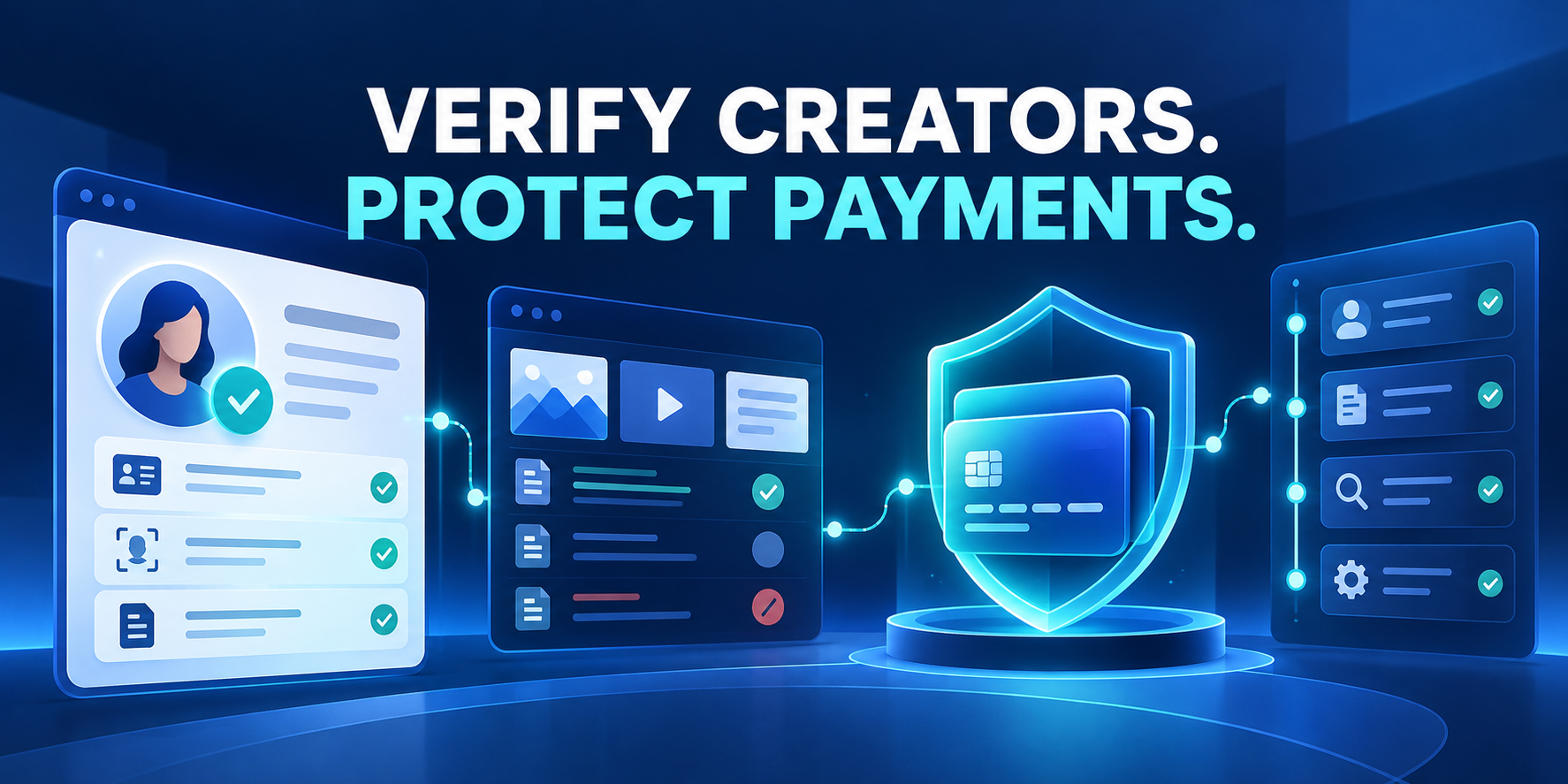
A platform can have a smooth checkout, active subscribers, and a working payment connection, yet still face a difficult question from its acquiring bank: who is allowed to upload content, and how does the platform know?
For creator and subscription platforms, payment risk is connected to more than the person paying. It can also involve the people creating content, the people shown in that content, the way complaints are handled, and the records that support a platform’s decisions.
This is why a user verification platform can be part of a wider merchant risk programme. Verification does not guarantee that a bank, acquirer, card network, or payment provider will accept a business. It can help a platform build a clearer process for deciding who may access higher-risk features and what evidence it can provide when that process is reviewed.
A payment dispute is visible at the end of a customer journey, but the risk may have started much earlier. A platform might have approved a creator without confirming their identity, published content without reviewing it, or allowed a complaint to remain unresolved.
That does not mean every platform must apply the same controls to every user. It means the platform should understand where a false identity, missing consent record, or unreviewed upload could create legal, financial, or reputational exposure.
A risk-based process can apply stronger checks to creator onboarding, high-volume accounts, new payment activity, or content uploads while keeping lower-risk visitor journeys proportionate.
Age checking a viewer and verifying a creator are related controls, but they answer different questions. A viewer check asks whether the person meets an access threshold. A creator check may ask who the account holder is, whether they are allowed to receive payments, and whether the platform can connect the account to the people involved in uploaded content.
One successful check should not silently stand in for another. A platform that confirms a viewer is over 18 has not automatically completed creator onboarding, KYC, consent review, or payment risk assessment.
This distinction helps teams choose the right level of assurance for each action. It also makes a provider conversation clearer: the platform can explain which decision it needs to make, which result it needs, and which records it must retain.
Current card network materials show why payment partners may examine creator and content controls closely. Visa describes enhanced safeguards for acquirers supporting legal adult content merchants and identifies age and consent verification, reporting processes, and compliance with applicable law among the safeguards relevant to that environment.
Mastercard’s 2026 Merchant Edition rules contain specific requirements for non-face-to-face adult content and services merchants. They include registration of the merchant by the acquirer, verification of content providers, identity and age checks for people depicted in content, pre-publication content review, complaint handling, and an appeals process for people depicted.
These rules do not mean every platform has the same obligations in every country. They show why a payment relationship can depend on documented operational controls, not only on whether a transaction technically succeeds.
A KYC verification platform should be evaluated against the decision it supports. A document check might help establish the identity and age of a creator, but it does not prove that every uploaded item is lawful or that every person shown has given valid consent.
Likewise, a verified account does not remove the need for access controls, content review, complaint handling, or payment monitoring. Verification is one part of a control system. Its value depends on how the platform uses the result and what happens when the check fails, expires, or conflicts with another signal.
Teams should define the result they need before choosing a vendor. They should also document who can see the result, how it is connected to the relevant account, and how long the supporting record is needed.
Use a process that matches the risk of the account. Higher-risk creator or payout features may require stronger identity and age evidence than ordinary registration.
A completed check should lead to a defined decision. Document which features open, which remain restricted, and when another check is required.
Identity verification does not inspect the legality or context of every upload. Assign responsibility for review, escalation, and removal.
A platform should give people a clear way to report potentially illegal or non-consensual material and a way for depicted individuals to request review or removal.
Store only the information the platform needs, protect access to it, and make sure the record can explain what was checked, when, and what decision followed.
ProperUser’s published partner agreement describes possible sharing of verification status, age confirmation, business verification status where applicable, authentication approval, and OTP validation status. It says raw identity documents, biometric data, video recordings, facial templates, and uploaded files are not transmitted to partner platforms.
The agreement also says that sharing requires explicit user action, user authorization, and authenticated API communication. The receiving platform retains responsibility for its own operations, compliance duties, acceptance decisions, and additional checks.
For a platform team, that creates a useful starting point: design the merchant risk process around the result the platform needs, then connect that result to the right permission, review, and record. A identity verification for SaaS platforms approach can reduce unnecessary document sharing while leaving the platform accountable for its own controls.
Payment partners may consider many signals, including business activity, transaction patterns, disputes, customer complaints, content controls, and the platform’s response to risk events. A verification result can strengthen the evidence around account ownership, but it cannot guarantee approval, prevent every fraud event, or remove the need to follow a provider’s terms.
The practical goal is a process that can answer simple questions: who was checked, what did the result establish, which feature did it unlock, what happened when a complaint arrived, and who could review the record?
Clear answers help a platform make better decisions before a merchant account becomes the focus of an urgent review.
No. Payment providers and acquirers apply their own rules and review processes. Verification can support a platform’s controls, but it does not guarantee acceptance or continued processing.
No. They support different decisions. Creator verification may relate to identity, age, payouts, and content responsibilities, while viewer age verification concerns access to an age-restricted service.
No. Platforms still need content review, complaint handling, consent processes, and removal procedures appropriate to their service and the rules that apply to it.