

Protect children online with smarter verification, responsible access controls, and privacy-first technologies that block harmful content while protecting users
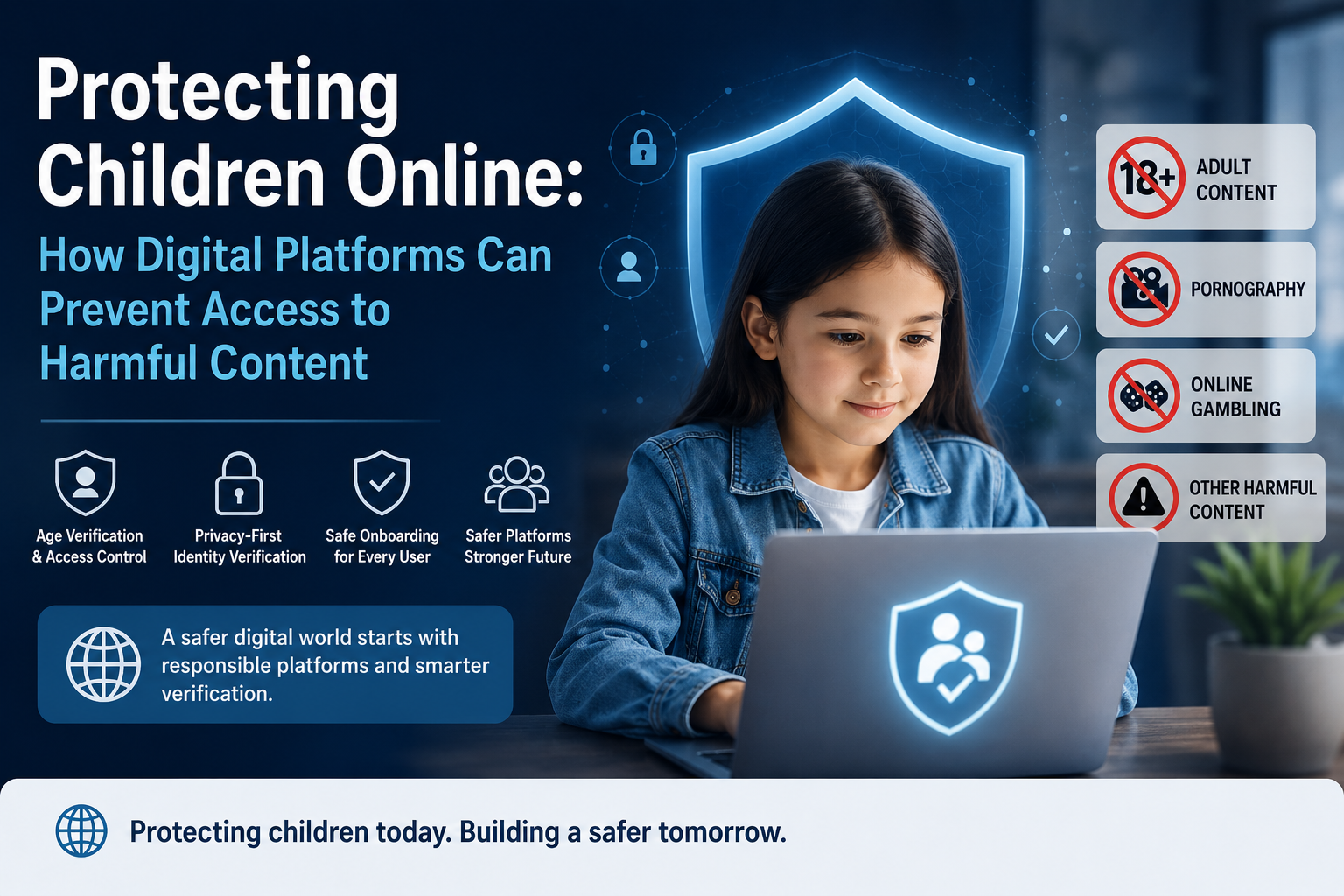
The internet has transformed childhood in ways that were unimaginable just two decades ago. Children and teenagers now use digital platforms to learn, communicate, play games, watch videos, and explore their interests. These opportunities have opened doors to education, creativity, and global connections. At the same time, they have introduced new challenges for platform owners, content providers, gaming companies, and subscription-based services.
One of the biggest responsibilities facing digital businesses today is ensuring that children are protected from content and services that are intended only for adults. Adult entertainment, pornography, online gambling, explicit material, and other age-restricted services are more accessible than ever before. Without effective safeguards, young users may encounter harmful content with just a few clicks.
Across the world, governments, technology companies, and child safety organizations are placing greater emphasis on responsible access control. Businesses are increasingly expected to implement systems that prevent underage access while respecting the privacy of legitimate users. This growing expectation has made secure onboarding solution technologies, privacy-first identity verification platform services, and secure identity verification without data exposure essential components of modern digital platforms.
Protecting children online is no longer simply a legal obligation. It has become a shared responsibility across the global digital ecosystem.
Children are spending more time online than any previous generation. According to UNICEF, one in three internet users worldwide is under the age of 18. Whether they are watching videos, joining gaming communities, using social media, or accessing subscription-based platforms, digital experiences have become part of everyday life.
While most online experiences are positive, children may also encounter content that is emotionally distressing or developmentally inappropriate. Exposure to pornography, gambling, graphic violence, or exploitative material can have lasting effects on emotional wellbeing and online behaviour.
The challenge extends beyond intentional searches. Modern recommendation algorithms, autoplay features, and personalized content feeds can sometimes expose young users to unsuitable material without them actively looking for it.
As digital platforms continue to expand, protecting younger audiences has become an essential part of building responsible online services.
Years ago, accessing age-restricted material often required significant effort. Today, it may only take a simple search or a single click.
Many websites still rely on basic self-declaration, allowing users to enter any birth date or confirm that they are over 18 without additional verification. While these methods were once considered acceptable, they no longer provide meaningful protection.
International organizations, child safety advocates, and regulators have repeatedly highlighted the limitations of traditional age gates. In many cases, children can bypass these checks within seconds.
The problem is not limited to adult entertainment websites. Online gambling platforms, live-streaming services, creator marketplaces, dating platforms, and even some gaming communities face similar challenges.
As digital services evolve, so must the systems designed to protect younger users.
Platform owners are increasingly expected to balance accessibility with responsibility.
Users expect smooth registration experiences, while regulators expect businesses to demonstrate reasonable efforts to prevent underage access. Achieving both objectives requires thoughtful platform design rather than relying on outdated verification methods.
Around the world, new legislation and industry standards are encouraging businesses to strengthen their child protection measures. Whether operating in Europe, North America, Asia-Pacific, or other regions, many digital companies now face higher expectations regarding online safety, transparency, and accountability.
Businesses that proactively address these expectations are often better positioned to build trust with users, advertisers, investors, and regulatory authorities.
The first interaction a user has with a platform often determines the level of security that follows.
This is why many organizations are investing in a secure onboarding solution that verifies eligibility during account creation instead of relying solely on user declarations.
Modern onboarding systems are designed to confirm whether users meet minimum age requirements while keeping the registration process as simple as possible for legitimate adults.
Rather than creating unnecessary friction, these systems help establish confidence that only eligible users gain access to age-restricted content or services.
For businesses, secure onboarding also reduces fake account creation, discourages fraudulent activity, and strengthens overall platform integrity.
One of the biggest concerns surrounding identity verification is privacy.
Many users worry that proving their identity means handing over excessive amounts of personal information or permanently sharing sensitive documents.
Fortunately, technology has evolved significantly.
Today's privacy-first identity verification platform providers are designed with data minimization in mind. Instead of collecting more information than necessary, they focus on confirming eligibility while limiting the storage of personal data.
For example, a platform may only need confirmation that a user meets the required age threshold rather than collecting their complete identity profile.
This approach helps businesses satisfy compliance requirements while reducing privacy risks for users.
As data protection regulations continue to expand worldwide, privacy-conscious verification has become both a legal and competitive advantage.
Modern verification is no longer about collecting as much information as possible.
Instead, the focus has shifted toward secure identity verification without data exposure.
Advanced verification technologies can confirm important facts—such as age or identity—without unnecessarily revealing additional personal details. This significantly reduces the amount of sensitive information stored by platforms, lowering the potential impact of data breaches or unauthorized access.
According to IBM's annual Cost of a Data Breach Report, the global average cost of a data breach remains above $4 million. Reducing stored personal information has become an important strategy for improving cybersecurity and protecting user trust.
Verification systems that prioritize both security and privacy allow platforms to meet regulatory expectations without compromising user confidence.
Parents want reassurance that digital services take children's safety seriously.
Adult users expect responsible moderation and secure access to age-restricted content.
Advertisers increasingly prefer platforms that demonstrate strong governance and user protection.
All of these expectations contribute to one important outcome: trust.
Platforms that implement effective verification processes send a clear message that safety is a core business priority rather than an afterthought.
This trust benefits every stakeholder, including users, business partners, regulators, and platform operators themselves.
Many organizations initially introduce verification technologies to meet regulatory requirements. However, the business benefits often extend much further.
Companies that invest in responsible access control frequently experience stronger customer confidence, reduced fraudulent activity, improved advertiser relationships, enhanced brand reputation, and greater readiness for future regulatory changes.
As global digital markets become increasingly competitive, trust is becoming one of the most valuable competitive advantages.
Protecting children is therefore not only the right thing to do—it is also good business.
Technology continues to evolve, and so do expectations for online safety.
Artificial intelligence, reusable digital credentials, biometric verification, and privacy-enhancing technologies are making age assurance more accurate while reducing friction for legitimate users.
Future digital platforms will likely combine multiple verification methods that protect children without creating unnecessary obstacles for adults.
The goal is not constant surveillance.
The goal is responsible access.
By investing in smarter verification systems today, platforms can build safer online communities that benefit users of every age.
Children spend more time online than ever before, increasing the risk of exposure to harmful or age-restricted content. Platforms are expected to implement stronger safeguards that prevent underage access while supporting safe digital experiences.
A secure onboarding solution verifies user eligibility during account registration, helping platforms prevent underage access, reduce fraudulent accounts, and strengthen overall security.
A privacy-first identity verification platform confirms user identity or eligibility while collecting only the information necessary for verification. This approach helps protect user privacy and supports compliance with modern data protection regulations.
Secure identity verification without data exposure uses modern verification technologies to confirm information such as age or identity without unnecessarily storing or revealing sensitive personal data. This reduces privacy risks while maintaining strong security standards.
Protecting children online is one of the defining responsibilities of today's digital platforms.
As online services continue to expand across every region of the world, businesses must ensure that young users are protected from adult content, gambling, pornography, and other age-restricted services.
By investing in a secure onboarding solution, adopting a privacy-first identity verification platform, and implementing secure identity verification without data exposure, organizations can create safer digital environments while respecting user privacy and supporting regulatory compliance.
Building a safer internet requires collaboration between technology providers, regulators, businesses, and families. Platforms that embrace responsible access control today will be better prepared for tomorrow's digital landscape while earning the trust of users around the world.