

Fake accounts increase fraud, spam, and trust issues across digital platforms. Learn how KYC and identity verification help businesses create safer onboarding experiences
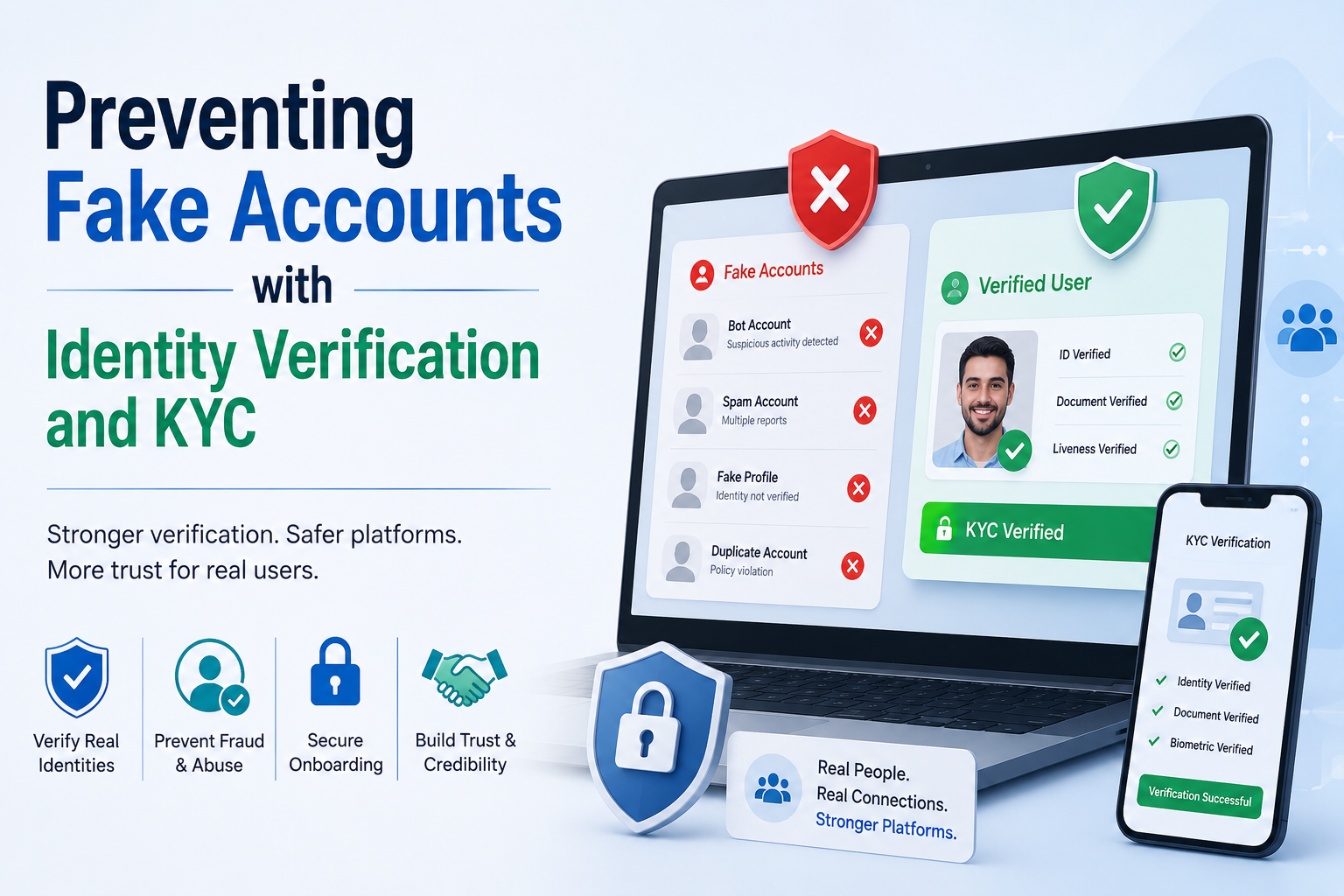
Fake accounts have become one of the biggest operational and security challenges facing digital platforms today. From SaaS businesses and online marketplaces to creator economy platforms and subscription services, fraudulent accounts are affecting trust, damaging user experiences, and increasing financial risks at an unprecedented scale.
For many companies, fake accounts are no longer just a moderation issue. They directly impact customer acquisition costs, platform credibility, payment fraud, and long-term growth.
The rise of automated bots, synthetic identities, and large-scale account farming has made it easier for bad actors to manipulate digital ecosystems. Fraudsters use fake accounts to abuse free trials, spread spam, manipulate reviews, bypass platform restrictions, conduct payment fraud, and even impersonate legitimate users.
As online fraud continues to evolve, businesses are increasingly turning to stronger identity verification and Know Your Customer (KYC) processes to protect their platforms. Modern verification technologies are helping companies build safer onboarding experiences while improving user trust and regulatory readiness.
Today, adopting a reliable KYC verification platform, implementing stronger identity checks, and deploying a scalable secure onboarding solution are becoming critical parts of sustainable platform growth.
The scale of fake account activity has increased dramatically across digital platforms over the past decade.
Social media networks, marketplaces, fintech apps, SaaS products, and creator platforms all face growing pressure to reduce fraudulent registrations and suspicious activity. According to multiple cybersecurity and fraud prevention reports, fake accounts account for a significant percentage of online abuse cases, including spam campaigns, account takeovers, fraudulent transactions, and promotional manipulation.
For SaaS businesses, fake registrations often inflate infrastructure costs and distort product analytics. Fraudsters may repeatedly create accounts to exploit free trials, abuse referral systems, or scrape platform data.
Marketplaces face even greater challenges. Fake seller accounts can damage consumer trust by listing counterfeit products, manipulating ratings, or conducting payment scams.
Creator platforms also struggle with impersonation accounts, engagement fraud, and automated bot activity that disrupts legitimate communities.
The financial impact is substantial.
Research from industry fraud studies estimates that online fraud and identity abuse cost businesses billions of dollars globally every year. Beyond direct financial losses, fake accounts also create operational strain for moderation teams, support departments, and compliance units.
More importantly, fake accounts weaken trust.
Users become less likely to engage with platforms where reviews feel manipulated, interactions appear artificial, or fraudulent behavior becomes common.
That is why many businesses are investing in stronger identity verification for SaaS platforms and digital onboarding systems designed to detect suspicious users earlier in the registration process.
For years, many digital platforms prioritized frictionless onboarding above everything else.
The goal was simple:
But minimal onboarding controls also created opportunities for abuse.
Simple email verification or username-password registration systems are no longer sufficient for platforms handling sensitive interactions, financial transactions, creator monetization, or large-scale user communities.
Modern fraud operations are highly automated. Bots can create thousands of fake accounts within minutes using disposable emails, virtual phone numbers, leaked credentials, and AI-generated identity information.
This has changed how businesses approach onboarding security.
Instead of focusing only on fast registration, companies are now prioritizing trust-based onboarding models that balance user experience with verification controls.
This shift is driving demand for stronger secure onboarding solution frameworks capable of reducing fake registrations without creating excessive friction for legitimate users.
Identity verification has become one of the most effective ways to reduce fake account activity across digital platforms.
Verification systems help platforms determine whether a user is likely to be genuine before granting access to services, transactions, or platform features.
Modern identity verification methods may include:
These systems help platforms detect suspicious activity patterns that traditional registration systems often miss.
For example, identity verification can identify:
This creates stronger trust signals within the platform ecosystem.
For SaaS companies, early verification can significantly reduce abuse of free-tier products and fraudulent sign-ups that consume operational resources.
For marketplaces, identity verification helps establish greater confidence between buyers and sellers.
For creator platforms, stronger verification systems reduce impersonation risks and improve community authenticity.
As digital fraud grows more sophisticated, many companies are integrating a dedicated KYC verification platform into their onboarding infrastructure to strengthen both compliance and fraud prevention capabilities.
Know Your Customer (KYC) processes were traditionally associated with banks and financial institutions.
Today, that is changing.
A growing number of digital businesses outside the financial sector are adopting KYC principles to improve platform integrity and reduce abuse risks.
This is especially relevant for:
These platforms increasingly handle:
As a result, identity trust has become more important.
KYC processes help businesses verify user legitimacy while reducing anonymous abuse and fraudulent behavior. They also create stronger audit trails that can support compliance investigations, dispute resolution, and fraud monitoring.
Importantly, modern KYC systems are no longer designed only for heavy compliance workflows.
Many platforms now use lightweight verification models that balance:
This evolution has made identity verification for SaaS platforms far more practical and scalable than older compliance systems.
Many businesses underestimate how deeply fake accounts affect long-term growth.
The damage extends beyond obvious fraud losses.
Fake accounts can:
For creator platforms, fake engagement can damage relationships between creators, advertisers, and audiences.
For SaaS companies, fraudulent accounts may artificially inflate usage metrics while generating little actual revenue.
For marketplaces, trust erosion can directly reduce transaction volume and customer retention.
In highly competitive industries, user trust often becomes one of the most valuable business assets.
Platforms that fail to control fake account activity risk creating environments where legitimate users no longer feel safe or confident engaging.
That is why businesses increasingly view verification systems not only as security infrastructure but also as growth infrastructure.
A scalable secure onboarding solution can improve both fraud prevention and customer confidence simultaneously.
One of the biggest challenges for digital platforms is implementing stronger verification without harming conversion rates.
Users still expect onboarding to feel:
Aggressive verification requirements can increase drop-off rates if poorly implemented.
This is why modern onboarding strategies focus heavily on risk-based verification models.
Instead of applying the same verification process to every user, platforms increasingly use adaptive systems that evaluate risk signals dynamically.
For example:
This layered approach improves efficiency while reducing unnecessary friction.
The most effective onboarding systems are designed to protect the platform without making legitimate users feel distrusted.
As fraud tactics evolve, businesses are investing in intelligent onboarding flows supported by flexible KYC verification platform technologies capable of adapting to different user risk profiles.
Digital platforms now compete on more than features and pricing.
Trust has become a major differentiator.
Users are increasingly drawn toward platforms that:
This is particularly important for younger digital audiences who are highly aware of online scams, impersonation risks, and data misuse.
Platforms with visible verification standards often create stronger perceptions of reliability and professionalism.
This trust can directly influence:
Businesses that invest in stronger identity verification for SaaS platforms are not simply preventing fraud. They are improving the overall quality and credibility of their ecosystems.
The future of digital platforms will likely involve even stronger identity and verification standards.
Governments are introducing stricter regulations around online safety, financial crime prevention, platform accountability, and digital identity management.
At the same time, AI-generated fraud, deepfakes, and synthetic identities are making fake account detection more difficult.
This means businesses must prepare for a future where identity trust becomes increasingly central to digital operations.
Forward-looking companies are already modernizing onboarding infrastructure, strengthening verification systems, and building more resilient fraud prevention frameworks.
Platforms that delay these investments may face rising abuse rates, operational costs, and reputational risks over time.
Fake accounts are no longer a minor platform inconvenience. They are a serious business challenge affecting trust, security, compliance, and long-term growth.
As fraud becomes more advanced, digital platforms must rethink how users are verified and onboarded.
Businesses implementing a modern KYC verification platform, investing in stronger identity verification for SaaS platforms, and deploying a scalable secure onboarding solution will be better positioned to reduce abuse, protect users, and build more trusted digital ecosystems.
In the years ahead, platforms that prioritize identity trust will not only improve security — they will create stronger, more sustainable growth.