

How privacy-first identity verification is transforming secure digital onboarding
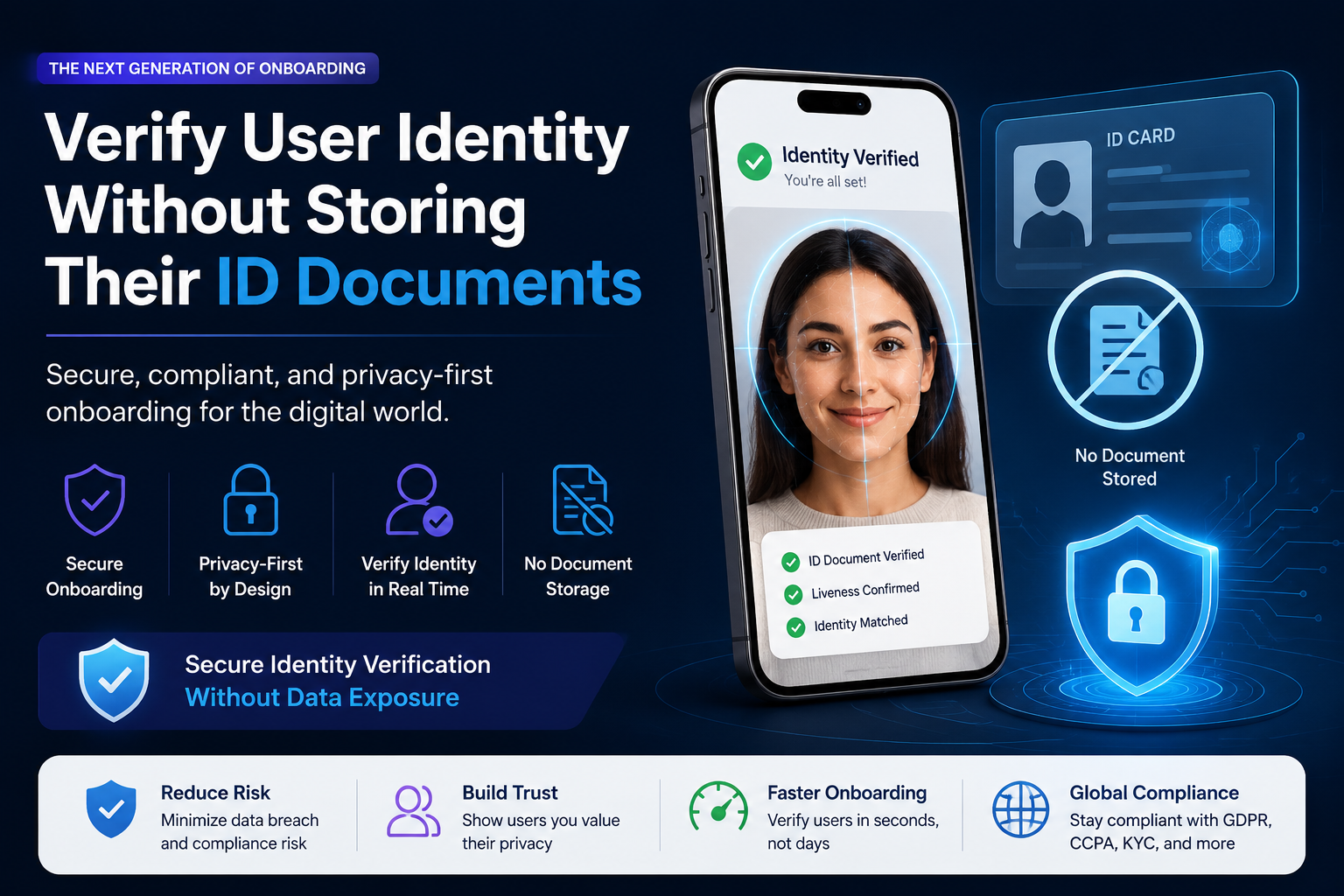
Every digital business wants the same thing during user onboarding: verify genuine users quickly while keeping fraudsters out. Whether you're running a SaaS platform, an online marketplace, a fintech application, or a creator economy platform, identity verification has become an essential part of building trust.
However, traditional verification methods often introduce a new challenge. Businesses collect and store sensitive identity documents such as passports, driver's licenses, or national identity cards to prove a user's identity. While this approach helps with compliance, it also creates significant security, privacy, and regulatory responsibilities.
According to IBM's Cost of a Data Breach Report 2024, the global average cost of a data breach reached USD 4.88 million, the highest ever recorded. Identity information remains one of the most valuable targets for cybercriminals because stolen documents can be used for identity theft, financial fraud, and account takeovers.
As privacy regulations continue to evolve and customer expectations grow, businesses are moving toward a new approach—verifying users without permanently storing their identity documents.
Modern identity verification technologies now allow organizations to confirm a person's identity while minimizing exposure to sensitive personal information. This shift not only reduces compliance risks but also improves customer confidence and creates a faster onboarding experience.
In this article, we'll explore how a secure onboarding solution works, why businesses are adopting privacy-first identity verification platforms, and how organizations can achieve secure identity verification without data exposure.
For many years, identity verification followed a simple process.
A customer uploaded a government-issued ID, the business stored the document, and compliance teams reviewed it manually or through automated software.
Although this approach helped verify identities, it also created a growing collection of highly sensitive customer information.
Every stored passport, driver's license, or identity card increases an organization's responsibility to protect that data against cyberattacks, insider threats, accidental exposure, and regulatory violations.
As businesses scale from thousands to millions of users, managing these identity documents becomes increasingly complex and expensive.
Beyond cybersecurity, organizations must also comply with privacy laws that govern how personal information is collected, processed, stored, and eventually deleted.
This is one reason why many businesses are rethinking how user verification should work in today's digital environment.
Instead of asking, "How can we store documents securely?" they're asking, "Do we need to store them at all?"
Consumer expectations have changed dramatically over the past few years.
People are becoming more aware of how organizations collect and use their personal information. High-profile data breaches and stricter privacy regulations have made customers increasingly cautious about sharing sensitive identity documents online.
Businesses that continue storing unnecessary personal information may unintentionally increase customer concerns while expanding their own compliance obligations.
This has accelerated the adoption of the privacy-first identity verification platform model.
Rather than permanently storing identity documents, these platforms verify the authenticity of government-issued IDs, confirm the user's identity, complete necessary compliance checks, and securely return the verification result.
The business receives confirmation that the customer has been successfully verified without retaining copies of highly sensitive identity documents.
This approach follows modern privacy principles such as data minimization, which encourages organizations to collect only the information necessary to complete a specific purpose.
For businesses, it means reducing security risks without sacrificing verification accuracy.
Modern verification systems use advanced technologies to confirm identities in real time.
When a user uploads an identity document, automated verification engines first analyze security features embedded within the document. Artificial intelligence can identify signs of forgery, document manipulation, or tampering within seconds.
The system then performs facial matching by comparing the ID photograph with a live selfie or video captured during onboarding. Liveness detection ensures the individual is physically present rather than using photographs, deepfakes, or recorded videos.
Once verification is successfully completed, businesses receive a verification outcome instead of retaining the underlying identity documents.
This enables secure identity verification without data exposure, significantly reducing the amount of sensitive information businesses need to manage over time.
For users, the process feels almost instantaneous.
Instead of waiting hours or days for manual reviews, identity verification can often be completed in less than a minute, creating a smoother onboarding experience while maintaining high security standards.
The benefits of a modern secure onboarding solution extend far beyond compliance.
One of the biggest advantages is reduced cybersecurity risk.
Organizations cannot lose or expose customer documents they never permanently store. This immediately decreases the potential impact of data breaches involving sensitive identity information.
Customer trust also improves.
Users increasingly prefer businesses that respect their privacy and clearly explain how their information is handled. Knowing that their identity documents are verified but not unnecessarily retained gives customers greater confidence during registration.
Operational efficiency is another major benefit.
Manual identity reviews often require dedicated compliance teams, increasing costs and slowing customer onboarding. Automated verification significantly reduces review times while allowing compliance teams to focus only on high-risk cases requiring further investigation.
For fast-growing SaaS companies, marketplaces, and fintech platforms, faster onboarding often translates directly into improved conversion rates and higher customer satisfaction.
Businesses benefit from stronger security without creating unnecessary friction for legitimate users.
One of the biggest challenges businesses face during onboarding is balancing regulatory compliance with customer privacy. Industries such as fintech, SaaS, online marketplaces, and creator platforms are often required to comply with Know Your Customer (KYC), Anti-Money Laundering (AML), and other identity verification regulations.
Traditionally, many organizations met these requirements by collecting and storing copies of identity documents. While this approach satisfied compliance obligations, it also increased the amount of sensitive data that required ongoing protection.
Modern verification technologies are changing this model.
A privacy-first identity verification platform enables businesses to complete identity verification while significantly reducing the amount of personal information they retain. Instead of maintaining large databases filled with customer identity documents, organizations receive verified identity results that demonstrate compliance without increasing unnecessary data exposure.
This approach also aligns with modern privacy regulations such as the General Data Protection Regulation (GDPR), the California Consumer Privacy Act (CCPA), and other data protection frameworks that encourage organizations to minimize the collection and retention of personal information whenever possible.
For businesses expanding into global markets, reducing stored sensitive data simplifies compliance while lowering long-term operational risk.
Identity fraud has become increasingly sophisticated.
Cybercriminals now use stolen identities, synthetic identities, forged documents, deepfake technology, and automated bots to bypass traditional onboarding processes.
According to the Federal Trade Commission (FTC), millions of identity theft reports are filed every year, highlighting the growing importance of stronger verification methods.
A modern secure onboarding solution helps businesses detect fraudulent activity before an account is created.
Artificial intelligence can analyze identity documents for signs of tampering, while biometric matching confirms that the person submitting the document is physically present during verification. Liveness detection further protects against spoofing attempts using photographs, videos, or digital recreations.
Risk assessment engines also evaluate device information, geolocation, IP addresses, behavioral signals, and transaction patterns to identify suspicious onboarding attempts in real time.
Rather than relying on a single verification step, businesses gain multiple layers of protection that improve fraud detection without creating unnecessary obstacles for genuine users.
The result is a safer onboarding process that protects both the business and its customers.
Trust has become one of the most valuable assets for digital businesses.
Customers are increasingly aware of how organizations collect, store, and use their personal information. Before sharing sensitive identity documents, many users want reassurance that their information will remain secure.
Businesses that clearly communicate their privacy practices often create stronger customer relationships from the very first interaction.
When users know that identity verification is completed without permanently storing their government-issued documents, they are generally more comfortable completing the onboarding process.
This level of transparency reduces hesitation while demonstrating that the organization takes data protection seriously.
For creator platforms, marketplaces, and subscription-based SaaS businesses, trust established during onboarding often contributes to stronger long-term customer retention.
Privacy is no longer viewed as simply a legal requirement—it has become an important competitive advantage.
Successfully implementing secure identity verification without data exposure requires more than selecting the right technology. Organizations should develop a verification strategy that balances security, privacy, compliance, and user experience.
Businesses should begin by collecting only the information required to verify identity. Limiting unnecessary data collection reduces compliance obligations while decreasing cybersecurity risks.
Choosing a trusted privacy-first identity verification platform is equally important. Businesses should evaluate providers based on security certifications, encryption standards, compliance capabilities, biometric accuracy, liveness detection, and support for international identity documents.
Encryption should protect every stage of the verification process, including data transmission, temporary processing, and verification records. Regular security audits and penetration testing help ensure that identity verification systems remain resilient against evolving cyber threats.
Organizations should also maintain clear privacy policies explaining how identity verification works, what information is processed, and whether any personal data is retained after verification. Transparency helps users understand the process and builds confidence during registration.
Finally, businesses should continuously monitor verification performance by reviewing fraud detection rates, onboarding completion times, false rejection rates, and customer feedback. Continuous improvement ensures the onboarding process remains both secure and user-friendly.
Identity verification is evolving beyond simple document checks.
Artificial intelligence, biometric authentication, decentralized identity technologies, and verifiable digital credentials are shaping the next generation of onboarding experiences.
Instead of repeatedly uploading identity documents to multiple platforms, users may soon verify their identities using reusable digital credentials issued by trusted providers. These technologies allow businesses to confirm identity while giving users greater control over their personal information.
Behavioral biometrics and continuous authentication are also becoming more common. Rather than verifying identity only during registration, systems can continuously evaluate user behavior to identify suspicious activity throughout the customer lifecycle.
As digital ecosystems continue to expand, businesses will increasingly compete not only on product quality but also on how securely and responsibly they handle customer identities.
Organizations that embrace privacy-first verification today will be better prepared for tomorrow's security, compliance, and customer expectations.
Digital onboarding no longer needs to rely on permanently storing highly sensitive identity documents. Advances in identity verification technology now allow businesses to confirm customer identities quickly, accurately, and securely while significantly reducing data exposure.
By adopting a secure onboarding solution, organizations can strengthen fraud prevention, improve regulatory compliance, accelerate user onboarding, and build greater trust with customers. At the same time, implementing a privacy-first identity verification platform helps reduce cybersecurity risks by minimizing the amount of sensitive information retained after verification.
The future of onboarding lies in secure identity verification without data exposure—a model that protects both businesses and users while supporting a more privacy-conscious digital world.
For SaaS companies, fintech platforms, marketplaces, creator platforms, and any organization handling customer onboarding, privacy-first identity verification is no longer simply an emerging trend. It is becoming the new standard for building secure, compliant, and trustworthy digital experiences.