

Age verification is replacing simple age gates as platforms prioritize safety, compliance, and privacy.
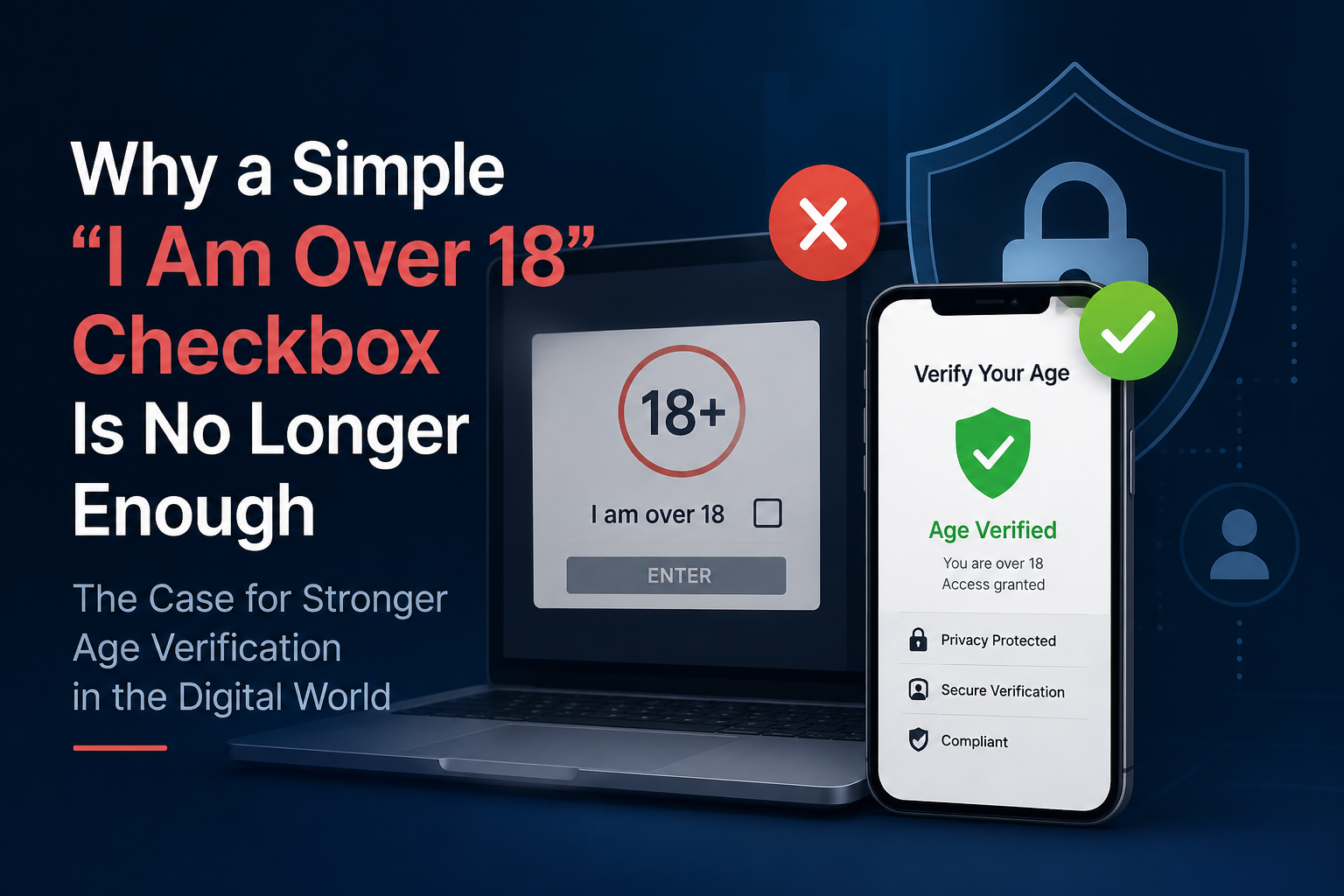
For years, online platforms relied on a simple solution to restrict access to age-sensitive content: a checkbox asking users to confirm they were over 18.
It was fast, inexpensive, and easy to implement. But in today's digital environment, that approach is rapidly becoming outdated.
Governments, regulators, parents, and online safety advocates are increasingly questioning whether self-declared age confirmation provides any meaningful protection for minors. As digital platforms continue to grow, so do expectations around accountability.
From adult content websites and gaming platforms to creator marketplaces and subscription-based services, businesses are facing increased pressure to demonstrate that they are taking reasonable steps to prevent underage access.
This shift is driving demand for more sophisticated age verification solutions, stronger digital identity verification processes, and improved secure user authentication methods.
The message from regulators is becoming clear: simply asking users to tick a box is no longer enough.
The biggest challenge with traditional age gates is their simplicity.
A user can enter any birth date or click a confirmation box regardless of their actual age. In most cases, there is no validation process behind the declaration.
Research conducted by the UK communications regulator Ofcom found that significant numbers of children continue to access age-restricted content online despite the presence of age confirmation screens. Similar concerns have been raised across Europe, North America, and Australia as regulators examine the effectiveness of existing safeguards.
The issue is not that age gates were designed poorly. Rather, they were created for a different internet.
Twenty years ago, online platforms operated in a less regulated environment. Today, digital ecosystems are larger, more complex, and more influential in people's daily lives.
As a result, expectations around user protection have evolved dramatically.
Governments around the world are introducing new frameworks designed to improve online safety.
The European Union's Digital Services Act, the United Kingdom's Online Safety Act, and various state-level regulations in the United States all reflect a common trend: platforms are expected to take stronger measures to protect younger users.
While specific requirements vary between jurisdictions, the direction is consistent.
Regulators are increasingly asking:
These questions have pushed businesses to rethink their approach to age assurance.
Simply collecting a self-declared birth date may no longer satisfy regulatory expectations in many industries.
As compliance requirements grow, organizations are investing in more reliable age verification solutions.
Modern age assurance technologies use multiple methods to verify whether users meet age requirements without unnecessarily exposing sensitive personal information.
Depending on the platform and regulatory environment, verification may involve:
The goal is not to create friction for legitimate users. Instead, it is to establish a reasonable level of confidence that age-restricted content is being accessed appropriately.
This balance between safety and usability has become one of the most important challenges facing online platforms today.
One of the most common concerns surrounding age verification is privacy.
Users often worry that verifying their age means surrendering large amounts of personal information.
However, modern digital identity verification technologies have evolved significantly in recent years.
Many verification providers now operate under privacy-by-design principles. Rather than storing unnecessary personal data, systems can verify age eligibility and return a simple confirmation result.
For example, a platform may only need to know whether a user is over 18, not their exact date of birth, home address, or other identifying details.
This approach helps businesses satisfy compliance requirements while minimizing privacy risks.
In a world where data breaches continue to make headlines, this distinction matters more than ever.
According to IBM's Cost of a Data Breach Report, the global average cost of a data breach exceeded $4 million in recent years. Reducing data collection wherever possible has become both a security and business priority.
Trust has become one of the most valuable assets for any digital platform.
Whether users are joining an adult platform, a gaming community, a creator marketplace, or a subscription service, they want confidence that the platform operates responsibly.
Strong verification processes contribute directly to that confidence.
When users know that a platform actively works to prevent underage access, reduce fraud, and improve account security, they are more likely to engage with the service.
This is particularly important for creator platforms and online communities where reputation plays a major role in long-term growth.
Businesses that invest in secure user authentication and age assurance are not simply responding to regulations. They are strengthening trust within their user base.
Many organizations initially view age verification as a compliance requirement.
However, the benefits often extend far beyond regulatory obligations.
Platforms implementing effective age verification solutions frequently experience improvements in several areas:
Reduced fraud and fake account creation.
Stronger community integrity.
Improved advertiser confidence.
Enhanced brand reputation.
Greater preparedness for future regulatory changes.
Investing in verification infrastructure today can help platforms avoid costly adjustments later as regulations continue to evolve.
In many cases, proactive compliance becomes a competitive advantage.
The internet has transformed how people communicate, create content, play games, and conduct business.
With that growth comes responsibility.
Platforms now play a critical role in protecting vulnerable users while maintaining positive experiences for legitimate audiences.
This responsibility is particularly significant in industries involving age-restricted content or financial transactions.
By combining digital identity verification with robust secure user authentication, businesses can create safer environments without creating unnecessary barriers for adult users.
The objective is not surveillance.
The objective is responsible access.
When implemented correctly, verification systems support both user protection and user freedom.
Age verification technology is continuing to evolve rapidly.
Industry experts predict that future systems will become increasingly seamless, allowing users to verify eligibility with minimal friction while maintaining strong privacy protections.
Innovations in biometric verification, cryptographic credentials, and reusable digital identity frameworks are already being explored by technology providers around the world.
As these technologies mature, platforms will gain access to verification methods that are both more effective and more privacy-conscious.
What remains unlikely is a return to the old model of simple self-declaration.
The expectations of regulators, businesses, and users have changed too significantly.
The future belongs to verification systems capable of balancing compliance, security, and privacy simultaneously.
Traditional age gates rely entirely on self-declared information and provide little assurance that users are actually old enough to access restricted content. Regulators increasingly expect platforms to implement stronger safeguards.
Age verification solutions are technologies and processes designed to confirm whether users meet minimum age requirements before accessing specific content, products, or services.
Digital identity verification uses various methods to confirm a user's identity or eligibility online. Depending on the solution, this may involve document verification, biometric analysis, database checks, or trusted third-party services.
Secure user authentication refers to technologies that verify users during account creation or login. Examples include multi-factor authentication, identity verification tools, and account protection systems designed to reduce fraud and unauthorized access.
The days when a simple checkbox could satisfy online safety expectations are rapidly coming to an end.
As digital platforms face growing scrutiny from regulators and consumers alike, stronger verification processes are becoming essential.
The challenge is no longer whether verification should exist. The challenge is implementing it in a way that protects minors, respects privacy, and supports a positive user experience.
Organizations that invest in effective age verification solutions, reliable digital identity verification, and robust secure user authentication will be better positioned to navigate evolving regulations and build long-term trust.
In the modern digital landscape, protecting users is no longer just a compliance issue.
It is a business imperative.